Thursday, March 13, 2008

Welcome to 7th Grade Technology

This blog's purpose is to provide information for the current and past students of the 7th Grade "Introduction to Technology" class at D.S. Ray Middle School.

I, Mr. Lepine, and my teaching partner, Ms. Wallace, team teach this course and are always looking for different ways to make the class better for all of our students.

We hope that this blog will further educate and inspire you to explore technology. In the future, we hope to have our students contribute to this blog and hopefully use it to connect with other people that can give them a better perspective about all the exciting areas of technology.

The other part of this blog will be set up to help current students be more successful in our Technology Class. Announcements of project deadlines and helpful links to technological websites will all be a part of this blog.

I look forward to constantly creating and updating posts, links, cool pictures of our projects and short videos that we create here at Ray Middle School!

Wednesday, March 12, 2008

Technology in the News (Weekly Assignment)

At the end of each week each student must locate, read and write about a news article that relates to a technology. The news article can come from the following: newspapers, magazines, or from the Internet. The general idea is to find an article that is about a machine, tool or device that either has a positive or negative effect on humans. The student must document where the article came from (name of newspaper, magazine or web site), list the title of the article and then write a brief description of the article that is at least four sentences (one paragraph).

Students will be paid $10 "Tech Bucks" for an article that is from a newspaper or magazine (they must be cut out as a clipping) and $15 for an article from the internet (must have the complete article printed out). Students can do EXTRA tech articles and will be paid $5 for each newspaper or magazine article they write up as well. They will be paid $10 per for an article from the internet and the write up. The write ups must be done on regular lined paper that is stapled to the article printout or clipping.

There is also a bonus "Going Beyond" opportunity for 7th Grade Technology Students! They must find an article that lists the author's name AND they must write a two sentence commentary on what they thought was the author's purpose in writing the specific article. We are looking for an understanding of what the author is trying to inform the reader. If the student successfully completes this, we pay them $5 extra! So... if the student does an internet article and the "Going Beyond" activity... they can earn $20!!! A nice payday!

Recommended web site links that are good sources for "Tech Articles"
CNN.com
Time for Kids
Boston.com Technology
How Stuff Works
Popular Science
New York Times Technology
Yahoo Technology News

What NOT to use as a "Tech in the News" article:
• No articles shorter than four paragraphs.
• No advertisements! If it has the cost of a device... it's an advertisement
• No Public Service Announcements about a technical or engineering organization meetings.
• Make sure that the articles is related to technology (Machine, tool or device); not about animals or stars.

Tuesday, March 11, 2008

Lego Activites - Solar Car & Maglev

Our "Solar Lego Vehicle"project has proven to be a very fun, but a very challenging activity for most students. In this activity, the students work in teams of two and must explore the area of solar electricity. With the use of photovoltaic solar panels and the Lego Simple Machine kits, the students will construct a very basic electric car. They then will peform a series of experiments on the trade off between a regular electric D.C. motor that is in their Simple Machine kit and the "geared down" solar electric D.C. motor.

The remainder of the six day long activity the team will design and construct a functional solar car using the Lego Simple Machine Kit, Solar Motor, and the Photovoltiac Panel. By the sixth day the car must be able to travel down the track under the 6 flood lamps on a low light condition (Dusk/Dawn setting) to receive full credit.

Here are some cool Solar Electricity and Solar Car Websites:

Last June a new activity was introduced to the 4th Quarter Technology Students! The new activity that we will use with our Lego Kits is LEGO MAGLEV. We have designed and created a totally new and original Maglev Track that has two rows of very powerful ceramic magnets which are located on either side of a track made up of Lego Bricks. A few volunteer students from our 3rd Quarter Technology Class have been experimenting with the new track and have had great success! We are so excited about this new track that we added on three extra days to the Lego Activity to include this cool new project! The 4th quarter students really enjoyed the Lego Maglev activity and found it fun and challenging. The only disappointment was that we had broken down the 24' long track into 6 four foot long sections for the students to work on. We are looking to purchase enough lego pieces and magnets to build another full length track that we will place in the middle of our exsisting CO2 Track. This will allow the students to race their Maglev trains at full speed for a long distance.

This new project was supported by a grant from McDonald's® Restaurants via a 2007 Mac Grant. This grant was made possible by the MacDonald's Operators Association of Central New York and Northern Pennsylvania. We would like to thank MacDonalds for providing the students of Ray Middle School with a new and exciting project!

Cool links to Maglev websites:
video
Thank you to Ray Middle School PTA for providing the funds
to begin the construction of our 50' Lego Maglev Track. Another
Big thank you goes out to the NYSTEA (New York State Technology
Teachers Association) for awarding us with this year's NYSTEA Mini-Grant
which will provided funding materials so that the
Maglev Line will go the entire length
of our "Rupracht Raceway" CO2 Car Track. A timing system has been installed along
with a system to power the trains down the track without battery packs.
The track goes
down the middle of the two CO2 car racing lanes.
This sememster is the 1st time we have raced on the new track!


video video

Monday, March 10, 2008

System Diagram for Technology

One of the cores of our standards in Technology Education in the Middle School is teaching the students how to solve technical problems using a basic system diagram. A systematic flow chart approach to solving problems is a method that is used by many engineers and systems operators. The students explore the elements of the System Diagram for Technology through a PowerPoint slide show.

They will then apply what they have learned by developing five Input Statements regarding their CO2 Car System. They will go through all the Process steps involved with the creation of their car. We require that they list and name all of the tools, machines and materials/resources needed to finish their project. The actual results or Output of their car are constantly monitored by a variety of methods and devices. The students use triple beam balances, a wind tunnel and will get race time feedback from a computer control race track, The Rupracht Raceway. Lastly, the students will be required to assess their CO2 Car's results and compare them with their desired results/input and be able to express how, if given a chance, they could adjust or make their car better, thus matching their desired results!

Logo Design Activity

Each semester the students will need to create a logo decal for their CO2 Race Car. They have the option to either design their own or use one of the five class designs. Those who choose to design their own must meet specific criteria and meet with Mr. Lepine's approval. If the design is approved, they can earn up to $20 extra Technology Dollars! The class spends a period learning about the Logo Design Process through a lesson and slideshow featuring the Syracuse "Sky Chiefs" AAA Baseball team's logo development by Mark Russell Associates. Local Baldwinsville residents, Tom Collins and Tom Merrick have contributed sketches and details on how a professional logo is developed. Check out our Logo Design Process PowerPoint Lesson including some student logo examples.

The students take the original artwork that has been created and will use iMac computers to scan and save the logo into the computer as a graphic file. The logo sketch is then cleaned up and altered with added text to create a logo decal. The decal is then reduced in size to fit onto their small CO2 car body. The car must have a logo on it as part of the car grading criteria.

Every semester there are logos that have been created that look amazing! It is great to see an artistic student combine their talents with a computer to produce a piece of artwork that can be mass produced as a professional looking logo.

Here is a link to a website that explores how to design a good logo.

Sunday, March 9, 2008

CO2 Car Project

The main event for the 7th Grade Technology class is our CO2 Car Project. Most of our class instruction and exploration has been developed so that each student will design, draw and create a functional wooden car that is propelled by a carbon dioxide gas cartridge. The students will explore the principles of what it takes to make a 2x4" pine block into a high speed vehicle! Our students will apply terms such as aerodynamic value, drag, and friction as part of the design of their car. Click here to see The Technology Words of the Day slideshow. Each student will conduct an internet search on CO2 car designs and will need to complete a worksheet on a very cool and informative website called The Science of Speed.

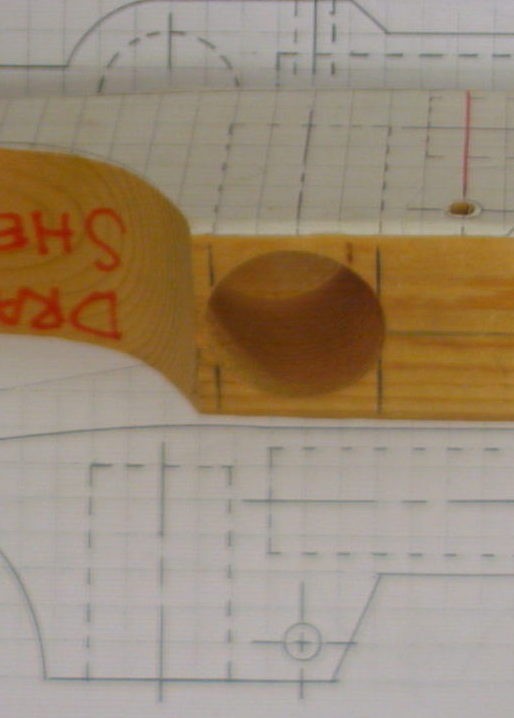
We spend a lot of time designing and drawing the cars. The students are taught to use two-view working drawings that show the side and top view of the car. The students watch a series of short videos that we have made on technical drawing. The entire class will use the SIX STEP PROCESS that assists the students in drawing any car design. The class will use another instructional video that assists with the drawing of the dragster with a hole in front.

Another great resource is the website of the British Land Speed Vehicle http://www.bloodhoundssc.com/. The team is working to design and build a record breaking Land Speed Vehicle. This is much like a super-sized CO2 Car so check it out!

We have been taking pictures of the most unique and creative CO2 Car designs that are made each semester. Recently, I have produced a video of all of these cars in addition to a video of one of our CO2 Car Races. Maybe your design is on there or will be put on the newest version of the video. I do plan on updating the video after each semester's races. Attached to the video is an Excell spreadsheet file of our Top 100 ~ All Time Race List. Look for it within the Support Files that are attached with the video.

Saturday, March 8, 2008

Hydroponic Garden Systems

For the past eight years, we have been using Hydroponic Gardening as a "live" display of systems, sub-systems and bio-technology. Hydroponic gardening is the growing of plants without soil, and because we grow our plants indoors, without natural sunlight. Each school year a team of students operate the hydroponic system. We usually grow "Salina Bibb Lettuce" and the students then market and sell the lettuce to the staff and parents of Ray Middle School. The funds are used to offset the cost for the students to attend Oswegatchie Camp the next summer.

The history of our efforts with Hydroponic gardening is show through a video on my TeacherTube site. The "old" NFT system was given to us during the 2000 school year by Mr. William Stowell and his FFA Chapter from South Jefferson High School. We just recently replaced that system with our new system, the Bonzai Wheel. The funding to purchase this system came from the family, friends and colleages of Bob Rupracht. Bob was an Industrial Arts/Technology Teacher in Baldwinsville for 33 years. The Bonzail wheel will operate, educate and produce lettuce in his memory.

We purchase all our hydroponic supplies (including the Bonzai Wheel) from California Hydroponics aka Hydrotek in East Syracuse, New York. You can contact Hydrotek Manager, John Butenko, in regards to purchasing any hydroponic supplies or systems (john.butenko@hydrotek.ca) Another great resource for hydroponic gardening is The Growing Edge magazine which always has information on hobby gardening and other educational uses of Hydroponics and Aquaponics.

Another interesting local use of hydroponic gardening which produces lettuce to local grocery stores is the Cornell University Floating Hydroponic Greenhouse in Ithaca, NY. Here is a very informative video about the Cornell Hydroponics that Mr. Matt Wisniewski produced in 2004 while he was a student teacher here at Ray Middle School.

This school year I have a team of students that are operating both the Hydroponic systems and Aquaponic Systems. My 7th Grade Team members are Taylor Brown, Parth Patel, Lindsay Caswell, Renee Fenzi, D.J. Simmons and Team Captain John Taylor. My 6th Grade Team members are Jeremy Schutz, Emma Atkinson, Cicely Ekross, Paige Dickter, Andreana Reed and Team Captain Evan Murphy. They are doing an outstanding job and have created a really cool blog about their systems and their Hydroponic Lettuce sales. Please check it out: http://raymsaquaponics.blogspot.com/

Friday, March 7, 2008

Our Aquaponic System

Aquaponics is the bio-technology of growing plants with nutrient rich fish waste water. We raise Tilapia fish in a 55 gallon fish tank that pumps the tank water to a three foot long rain gutter. We use the NFT (Nutrient Flow Technique) to grow plants. In the past we have grown lettuce, basil, sweet peas, green peppers and most recently we have a had great success growing jalapeno peppers! The "dirty" water from the tank provides all the nutrients that the plants need to grow. The roots of the plants absorb the nitrates and in part clean the water and then that water is recycled back into the tank.

The fish need food and clean oxygen rich water to survive. The water must be warm; Tilapia like it best around 80
degrees Fahrenheit. We have had some success and failure with the fish which require much attention and constant monitoring. The Aquaponic System is an ideal "living" example of the Technology System Diagram that we teach each semester.


We have been working on our system for the better part of three years. After getting four tiny
Tilapia from the Pioneer High School FFA Chapter (Teachers Martin Krause & Jon Clayson) we began this grand experiment! SUNY Cobleskill School of Agriculture (Dr. John Foster & Dr. George Crosby & Brent Lehman) have been a great resource and provider of Tilapia fish.

This project was also supported by a grant from McDonald's® Restaurants via a 2005 Mac Grant. This grant was made possible by the MacDonald's Operators Association of Central New York and Northern Pennsylvania. We would like to thank MacDonalds for providing the students of Ray Middle School with a new and exciting project!
video

Wednesday, March 5, 2008

Oswegatchie Camp

Once again I will be organizing a camping week to the beautiful "Camp O" this summer WEEK FIVE: AUGUST 2 - 7th. I have been associated with Oswegatchie Camp for most of my life as a camper, counselor, camp director and a few summers as the camp’s videographer. I no longer work at the camp, however, I now organize the camping trip which gives me the opportunity to share this wonderful place with my students as well as get an opportunity to enjoy the camp at least once during the summer!

The camping week opportunity will be open to any Baldwinsville student grades 6th to 12th. We will have room for at least 94 campers on the two Birnie Charter Buses, so we can provide this transportation service on a first come, first serve basis to the first 94 students that register... so register early!

There will be an informational meeting for parents and students on Wednesday, April 29th. The meeting will be held in the Technology Lab at Ray Middle School at 6:00 pm. I, along with some veteran campers will be there to give further details and answer any questions in regards to the camp’s program and registration. There is a complete camp brochure that contains registration materials and a student health form which needs to be completed by your family’s physician. Check out the camp’s web site: http://www.oswegatchie.org/campo.html. The camp's website has PDF registration and health forms specifically for Baldwinsville Campers. Please follow the directions to registering in the paragraph below.

The total cost for the camping week will be now $310.00 per camper if paid on or before Friday, June 12th. This will ensure the “Early Bird” special and guarantee a seat on one of the charter buses. I am charging $35 for the round trip bus transportation. I would like to process ALL of the registration of ALL of the Baldwinsville student campers so I will need to receive all forms and checks! Please make the checks payable to: Oswegatchie Camp. If you are interested in the camp please contact me asap or come to the meeting on Wednesday, April 29th.

Make sure that all registration materials
are sent to Mr. Lepine.
Please do not regisiter with the camp directly before June 12th.

D.S. Ray Middle School
7650 VanBuren Road
Baldwinsville, NY 13027

To contact Mr. Lepine: Ray Main Office 638-6106 or e-mail: mlepine@bville.org

Come and ride the "Zip Line" 40 feet
up in the air soaring across the water!

video